Preface
The advent of photopolymer resin plates greatly advanced the flexographic printing process. When introduced over 30 years ago, they fundamentally revolutionized registration in flexography, as their dimensional stability—owing to the dimensionally stable polyester (PET) substrate—was far superior to the commonly used rubber plates at the time.
Later, digital plates came into use. Thanks to reduced dot gain, digital plates enabled high-line-screen printing. At the same time, compared with conventional analog plates, digital plates further improved plate dimensional consistency by eliminating the dimensional tolerances associated with film negatives.
Based on the above factors, the print quality of flexography has now approached that of gravure, and in some aspects even surpassed it. Efficient and stable flexographic printing is becoming increasingly competitive. Under these circumstances, any factor affecting print quality—even slight deviations in flexographic plate dimensions—should be further improved.
This article will examine dimensional deviations in flexographic plates, with a primary focus on commonly used digital plates. As shown in Figure 1, the factors affecting plate dimensional deviation and print registration are ranked from low to high impact, indicated by the position of the dots along the horizontal bars.
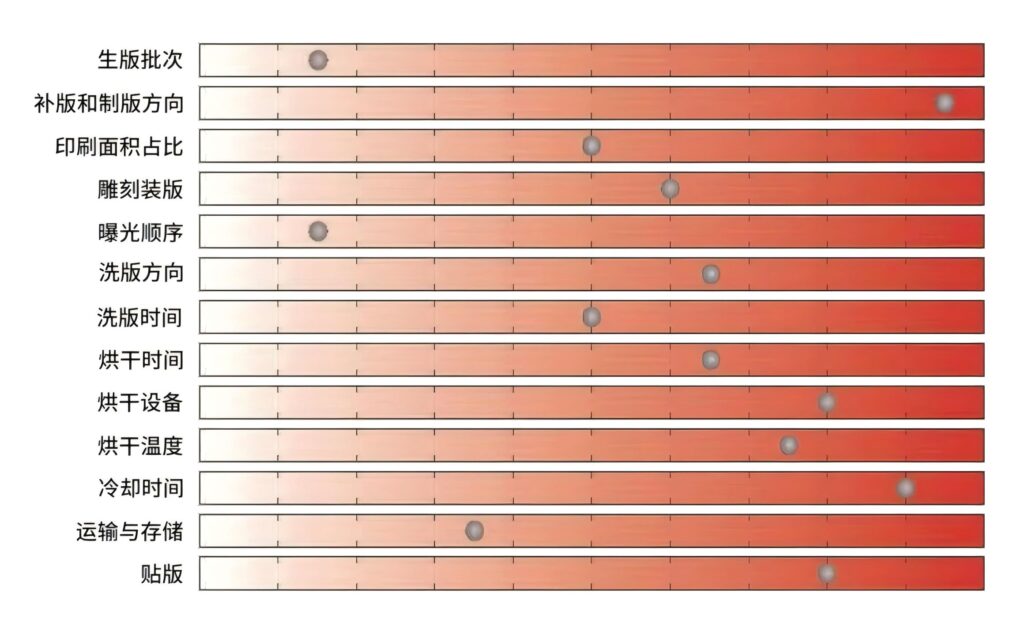
Figure 1 Influencing factors of plate dimension deviation
1 General Causes
1.1 Raw Plate Batch

If a set of plates is made from raw plates of different batches—whether unintentionally or deliberately by the plate maker—the resulting plates may exhibit certain dimensional differences. Why?
The raw material for flexographic plate making, commonly referred to as raw plate, is manufactured in batches by plate suppliers. Within the same production batch, raw materials and process parameters remain largely consistent; different batches inevitably have certain tolerances.
Although the PET substrate of flexographic plates has excellent physical stability, ambient temperature and humidity can still affect it. It is clearly impossible to maintain strictly constant temperature and humidity during raw plate manufacturing, transportation, storage, and plate-making processes. Therefore, purchasing and storing a large quantity of plates from the same batch can help plate makers avoid dimensional deviations caused by batch variations.
The standard practice is that a complete set of plates should be made from the same raw plate batch. However, due to cost pressures, it is unrealistic to expect plate makers to keep large inventories of a single batch; using different batches within one set is often unavoidable. Generally speaking, batch differences are considered to have a relatively minor impact on registration.
1.2 Replate and Plate-Making Direction

For a plate-making company, each color plate in a set should be made in the same plate-making direction—whether along the longitudinal or transverse direction of the raw plate. If a particular color plate is made in a different direction, it may cause significant registration deviation during printing, and this is one of the greatest risks for print registration issues.
This is because the PET substrate of flexographic plates is produced by extrusion stretching, resulting in a semi-crystalline (not fully crystalline) structure. The molecular orientation varies with direction, leading to anisotropy, and many properties depend on the extrusion direction.
In addition to the batch variation mentioned in 1.1, in actual production we may encounter the need for a replate (replacement plate) for a specific color. In such cases, it is highly likely that a different batch of raw plate will be used. When replating, it is essential to follow the same principle—using the same plate-making direction as the original plate.
1.3 Print Area Coverage

Under identical plate-making parameters, in isolated cases slight dimensional differences may be observed among plates in a set. For instance, a color with very low print area coverage may show slightly different dimensional changes compared to a color with very high coverage. This can be explained by the fact that the resin crosslinking reaction may counteract the support of the PET substrate.
A possible solution is to re-correct and apply individual length compensation for the affected color plate.
2 Plate-Making Process Causes
2.1 Mounting for Engraving

Mounting the raw plate onto the drum of the laser engraving equipment can sometimes cause warping. After imaging, when the plate is removed from the drum, the release of tension may lead to relaxation, resulting in distortion of the printed image. This error becomes more pronounced when the plate is printed together with other color plates. In the author’s experience, although extremely rare, once it occurs, it produces considerable registration errors.
It is recommended to thoroughly relax the raw plate before mounting on the engraving drum. While ensuring the plate does not fall off, this can be achieved by temporarily turning off the vacuum on the imaging drum. Additionally, after mounting, the plate should be inspected for flatness by checking light reflection.
2.2 Exposure Sequence

While exposure time is generally considered critical for plate quality, the processing sequence is often regarded as less important. In fact, the exposure sequence is a potential threat to final registration accuracy.
To be safe, it is recommended that the sequence of back exposure and main exposure, as well as the sequence of UVA and UVC treatment (when carried out separately), should always be kept consistent.
2.3 Washout Direction

Relevant studies have shown that the washout process may cause slight, irreversible swelling of the plate under certain conditions. Depending on the model and type of washout unit, many machines apply a certain tension during processing to pull the plate through the brush section. This tension has an even greater disruptive effect, potentially causing slight plate elongation, and the irreversible swelling may be exacerbated.
Of course, when all color plates in a set are processed in the same washout direction, registration issues generally do not occur. Therefore, it is recommended that all color plates in a set be washed in the same direction.
This is particularly important when using plates of different sizes (which usually indicates different batch numbers), as this increases the likelihood of altering the washout direction.
2.4 Washout Time

As mentioned in 2.3, the washout process may cause slight plate enlargement. Of course, we also know that plate enlargement is not the only reason washout time should be kept as short as possible.
The longer the plate is in contact with the washout solvent, the greater the resin swelling, leading to an increase in plate thickness. Excessive washout time or the use of unsuitable solvent can also cause delamination of the resin layer from the PET substrate or damage to the relief. The optimal washout time can be determined through relevant tests.
2.5 Drying Time

Regarding appropriate drying time, the raw material manufacturer’s recommendations should be followed, and then optimized based on the specific drying equipment reference values. There is no fixed recommendation for optimal drying time, as different plate types and thicknesses vary greatly in drying requirements. The optimal drying time is when the plate has nearly returned to its nominal thickness; excessive drying time can cause thickness shrinkage and dimensional shortening.
Even under optimal drying time, dimensional changes occur; therefore, it is essential to ensure that all color plates in a set have the same drying time. If the drying unit does not have a built-in drying time controller, each drying drawer should be equipped with a timer to control the time.
2.6 Drying Equipment

There are plate-making machines of various ages and manufacturers on the market. Tests have shown that the drying unit is the most critical piece of equipment affecting plate dimensional stability.
The reason is that some drying equipment exhibits significant temperature variations. If large temperature differences exist, plate dimensions may change accordingly. The drying drawers should ensure uniform temperature distribution, good air circulation, and adequate air volume.
2.7 Drying Temperature

Generally, the higher the drying temperature, the faster the plate returns to its nominal thickness. However, because the PET backing is temperature-sensitive, the drying temperature range is limited. The glass transition temperature (Tg) of PET is typically >70°C, above which irreversible dimensional changes occur. On the other hand, drying temperature should not fall below 50°C, otherwise the plate thickness tolerance after drying will be too large.
Note: Temperatures above 70°C must be avoided inside the drying unit. Since all commercially available drying equipment has certain fluctuations in their nominal temperature settings, a drying temperature between 50°C and 60°C is generally appropriate, as even with upward fluctuations, production can still be carried out safely.
Note: Glass transition temperature Tg: the temperature at which an amorphous polymer changes from a glassy state to a rubbery, viscous melt state.
2.8 Cooling Time

Plates expand when heated during drying. To restore them to normal dimensions at room temperature, a cooling period is required before UVA and UVC post-treatment. Otherwise, once the resin is fully polymerized through post-treatment, further dimensional changes are impossible. Therefore, it is essential to ensure that all color plates in a set have the same cooling time before post-treatment.
A minimum cooling time of 6–8 hours is generally required. If this is not feasible due to time constraints, at least a few minutes of cooling (generally until returning to room temperature; at this point, temperature control of the plate-making environment is also very important) should be maintained between the end of drying and the start of post-treatment, so that the plates can acclimate to the room temperature. Even so, larger dimensional deviations compared to the recommended cooling time can still be expected.