This article provides a detailed discussion of the self-cleaning technologies developed by major flexographic plate suppliers, and offers an outlook on the market application prospects of self‑cleaning flexo technology.
Today’s flexographic process is capable of using 1% dots at 175 lpi, with gradient dots fading to zero without a harsh cut‑off, achieving print quality comparable to offset on paper and gravure on film. However, flexography still cannot eliminate ink filling (plugging) in the plate. Whether in paper flexo, film flexo, high‑end label flexo, or medium‑to‑low‑end post‑print corrugated board, almost all flexo products are susceptible to ink plugging.
The most direct way to deal with ink plugging in flexo is to stop the press and wipe the plate, but stopping the press causes material and labor losses. Moreover, wiping only provides a temporary fix; after restarting, the plugging in that area often recurs. If flexography is to improve print quality and market share, it must effectively solve the problem of ink plugging. Self‑cleaning technology for flexographic plates has thus emerged, and in particular, self‑cleaning solutions based on flat‑top dot technology offer an effective remedy for the ink‑plugging challenge.
After reviewing a wide range of sources, the author has compiled four major self‑cleaning technology solutions: Asahi’s CleanPrint technology, MacDermid’s EPIC (Enhance Print Image Contrast) technology, Miraclon’s AED (Advanced Edge Definition) ink barrier technology, and XSYS’s AIF (Anti‑Ink‑Filling) technology. These are shared below.
—
I. Asahi CleanPrint Technology
The flat‑top plates produced with Asahi’s self‑cleaning technology have a relatively lower surface tension, characterized by a larger water contact angle (greater than 90°). When printing with plates featuring this self‑cleaning technology, the ink adhering to the dot tops does not flow down along the dot shoulders; instead, it transfers well to the substrate, allowing the press to run continuously without stopping for plate cleaning. In contrast, conventional flexographic plates tend to accumulate ink on the dot shoulders, with a tendency for ink to flow downward, which easily blocks the cells and, in severe cases, leads to ink plugging (as shown in Figure 1). This necessitates frequent press stops to clean the plate surface, significantly impacting printing speed and efficiency.
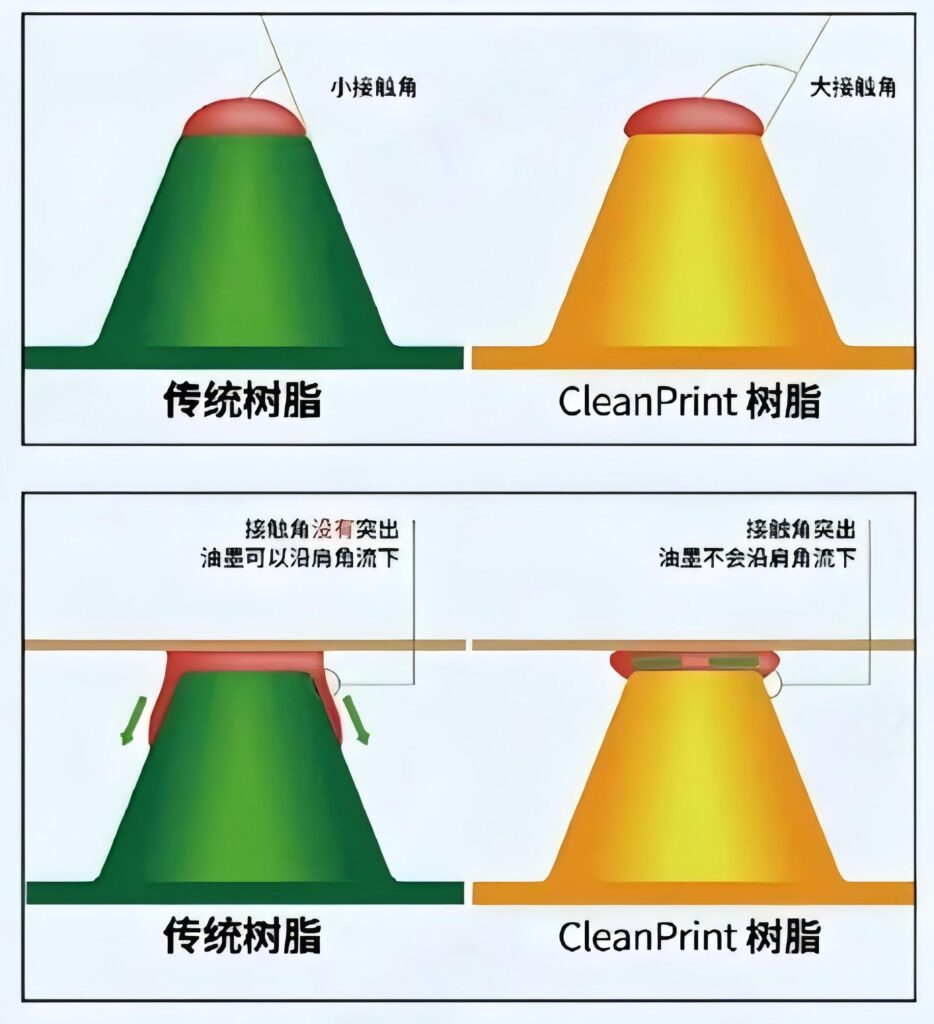
Figure 1 Comparison between a self‑cleaning flexographic plate and a conventional flexographic plate
(Image source: Asahi Kasei)
Asahi’s self‑cleaning technology was first applied to the flat‑top flexographic plate AFP™‑BFTK, and was subsequently extended to conventional digital plates AFP™‑TSP/TOP/STG, as well as traditional corrugated board plates AFP™‑APC/TPC. In addition to these solvent‑based plates, the technology was later developed into water‑washable flexographic plates AWP™‑CleanFlat/DEW and DEF.
Through user printing tests in the market, using the same printing equipment to compare AWP™‑DEF, AFP™‑TOP, and conventional solvent plates, the results showed that the AFP™‑TOP solvent plate with self‑cleaning technology improved Overall Equipment Effectiveness (OEE) by 15‑20% compared to conventional solvent plates, while the water‑washable self‑cleaning AWP™‑DEF improved OEE by 25‑35% compared to conventional solvent plates.
—
II. MacDermid EPIC Self‑Cleaning Technology
MacDermid’s EPIC technology stands for Enhance Print Image Contrast. Its photosensitive elastomer consists of two layers with different properties: an outer hard matte layer and an inner image‑forming layer (as shown in Figure 2). The matte layer contains very fine particles that create a rough surface, which during printing helps achieve better ink transfer in solid areas. This not only significantly increases solid density but also provides a visually smoother, more uniform appearance with less mottling.
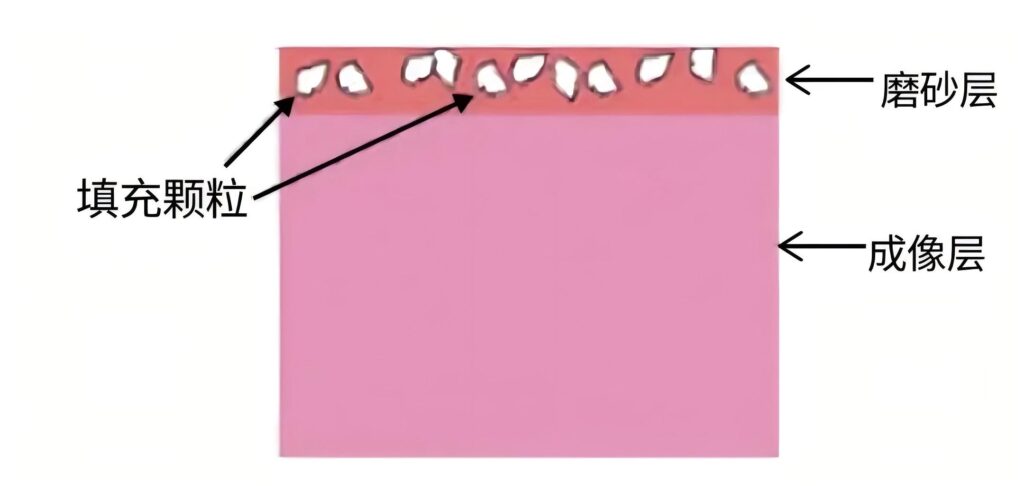
Figure 2 Schematic structure of the photosensitive elastomer in MacDermid EPIC plates
The self-cleaning EPIC technology involves modification of the original photosensitive layer formulation: silicone oil or other silicone materials are added to the imaging layer formulation, so that the surface energy of the matte layer is at least 5 dyn/cm higher than that of the imaging layer, achieving a lower surface energy in the cured imaging layer. Flexographic plates produced with this formulation can avoid picking up large amounts of paper fibers, dust, and ink during printing, thereby delivering a clean printing effect that prevents ink plugging.
MacDermid’s LUX ITP EPIC, ITP 60, and ITP M flat‑top dot plates were the first applications of this clean‑formula technology, subsequently extended to ITP EDGE flat‑top plates. These plates not only enable longer press runs without interruption for plate cleaning, but also make the plate surface easier to clean after the print job. In addition, this technology was extended to the conventional digital plate Digital MCP with bullet‑shaped dots, representing an attempt to apply the clean‑formula technology in UV ink printing.
—
III. Miraclon AED Ink Barrier Technology
Conventional round dots introduce many uncertainties to printing stability, especially the higher risk of scumming when printing pressure increases. Kodak (now Miraclon) launched the new‑generation DigiCap NX screening pattern technology, built on the original DigiCap. This technology can create appropriate micro‑holes on the plate surface based on the combination of ink, anilox roll, substrate, and tape, thereby modifying ink leveling to achieve optimal ink transfer. The individual pattern elements range from 5 to 30 μm in size, each approximately the diameter of a human hair (about 70 μm).
This digital surface treatment technology utilizes ink transfer and diffusion configurations to maintain high ink density in screened, solid, and text areas, while automatically applying smaller patterns at all edges (as shown in Figure 3). This allows ink to be stored and deposited only where needed. The barrier property of AED technology produces sharper and crisper print edges, prevents ink filling in reverse text and fine characters, and helps release air trapped in the ink. This technology ensures that ink is applied only where required, while being retained where it is not.
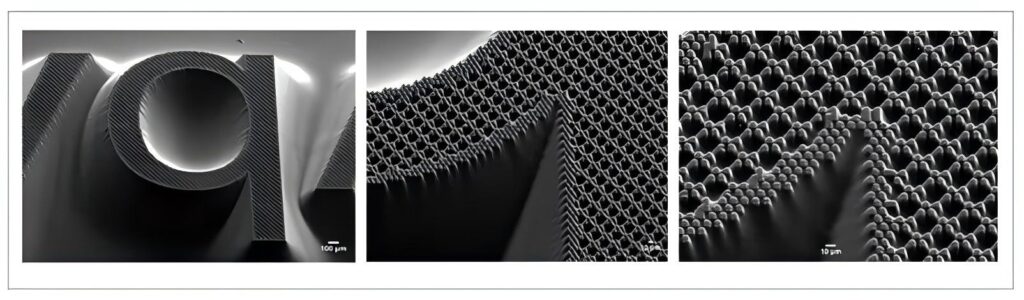
Figure 3 Application of AED technology on flat‑top flexographic plates (Image source: Miraclon)
Owing to its ink release characteristics, combined with flat‑top dot structure, the plate can reduce the impression pressure required. Miraclon’s self‑cleaning ink‑barrier technology reduces the frequency of press stops and plate wiping by operators, minimizes substrate waste, and extends plate life.
—
IV. XSYS AIF Anti‑Ink‑Filling Technology
XSYS’s AIF self‑cleaning technology (Anti‑Ink‑Filling) was developed from Flint Group’s anti‑plugging formulation. The plate’s photosensitive elastomer surface features an anti‑ink‑filling microstructure, which provides excellent ink deposition. This improves solid ink density on flexible films/foils while keeping both dots and non‑image areas clean during the print run. As a result, it effectively solves the problem of plate scumming caused by ink filling, reducing the number of press stops and enabling higher press speeds.
This proprietary technology was first applied to their flat‑top plates, such as Nyloflex FTH / FTV / FTS solvent‑based flat‑top flexographic plates, and later extended to solvent‑free thermal‑development plates, including both Nyloflex XVH / XFH flat‑top plates and Nyloflex XAH / XPH / XPM bullet‑shaped dot plates. XSYS was the first company in this field to pioneer such technology.